Pennsylvania ACA Health Insurance Plans Face Double-Digit Premium Increases in 2027
AI Generator
Health Expert
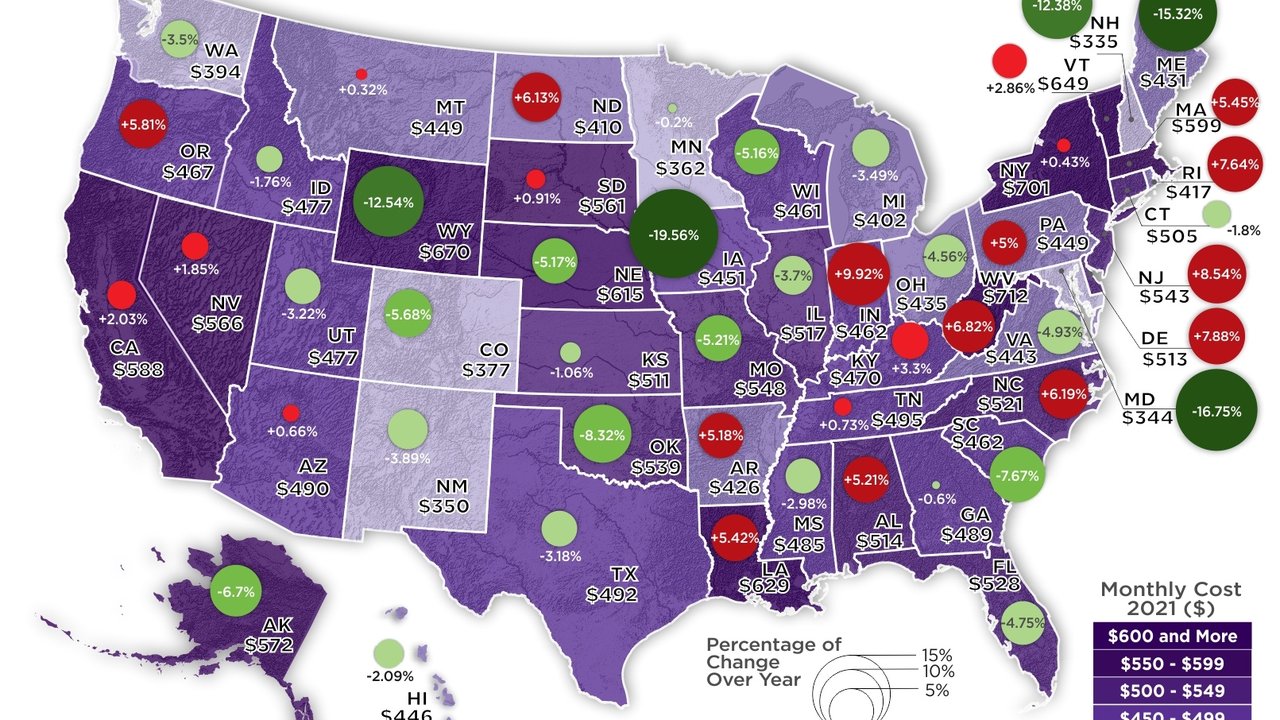
Pennsylvania ACA Health Insurance Plans Face Double-Digit Premium Increases in 2027 The American health insurance landscape stands at a critical junct...
Pennsylvania ACA Health Insurance Plans Face Double-Digit Premium Increases in 2027
The American health insurance landscape stands at a critical juncture as newly released regulatory filings signal an impending affordability crisis for consumers and employers alike. Recent filings reveal that major Pennsylvania ACA health insurers are proposing aggressive double-digit premium increases for the 2027 coverage year, a trajectory that threatens to destabilize household budgets across the Commonwealth. This looming financial shock is not an isolated regional phenomenon; rather, it serves as a glaring indicator of structural pressures accumulating within the broader United States healthcare marketplace. As actuaries recalibrate risk pools and medical inflation outpaces general economic indicators, stakeholders across the insurance and finance sectors must confront the mounting sustainability challenges of the Affordable Care Act exchanges.
At the heart of these proposed rate hikes lies a compounding mix of surging utilization rates, escalating pharmaceutical costs, and the gradual evaporation of pandemic-era federal subsidies. Insurers operating within Pennsylvania’s individual market report that members are utilizing medical services at frequencies exceeding pre-2020 baselines, particularly for elective surgeries and chronic disease management that were delayed during prior years. Furthermore, the persistent rise of specialty medications and gene therapies adds unprecedented volatility to carrier balance sheets. For corporate entities and enterprise solutions providers designing employee benefits packages, these regional rate adjustments foreshadow a turbulent upcoming open enrollment cycle that will demand immediate strategic intervention.
The Macroeconomic Strain on US Health Markets
The economic realities driving Pennsylvania's market adjustments reflect broader national trends that heavily influence enterprise insurance strategies and consumer purchasing behavior. When state insurance commissioners review these proposed rate increases, they do so against a backdrop of tightening macroeconomic conditions where household disposable income is already stretched thin. The expiration of enhanced federal premium tax credits, should Congress fail to extend them, threatens to price millions of middle-income Americans out of comprehensive coverage entirely. This potential flight of healthier, younger demographics from the risk pool risks triggering an adverse selection spiral, where only those with high medical needs remain insured, forcing premiums even higher in subsequent years.
Compounding this consumer-level strain is the evolving corporate landscape, where access to healthcare remains the ultimate tether for the American workforce. Recent labor market analytics from Gallup indicate that roughly one in four United States employees remain locked in their current jobs primarily to maintain health insurance benefits, creating a phenomenon often termed "job lock." This systemic friction impedes labor mobility and suppresses entrepreneurial risk-taking across the economy. Consequently, human resources executives and finance leaders find themselves re-evaluating their specialized services and corporate health plan structures, striving to balance escalating group health costs with the imperative of retaining top-tier talent in a competitive marketplace.
Regulatory Shifts and Operational Adaptations
Navigating this complex terrain requires a sophisticated understanding of regulatory modernization and administrative compliance. The United States Department of Labor has recently proposed a modernized electronic disclosure safe harbor for health plan documents, a welcome administrative update for enterprise-level plan sponsors seeking to streamline operations. By facilitating digital delivery methods for mandated disclosures, corporations can significantly reduce overhead printing and postage expenditures while simultaneously improving participant engagement. However, technology-driven efficiency alone cannot offset the foundational cost drivers of medical care, necessitating deeper structural changes in how health plans are negotiated and administered.
Interestingly, systemic cost containment strategies are beginning to emerge from unexpected corners of the healthcare delivery ecosystem, offering a glimmer of hope for long-term stabilization. Recent analyses from health policy foundations highlight how innovative small rural hospital networks are successfully leveraging regional collaborations and value-based care models to level the playing field against sprawling, consolidated health systems. By curbing unbridled consolidation and introducing transparent pricing mechanisms, these rural providers demonstrate that market competition can effectively moderate medical inflation. For insurance carriers crafting network adequacy strategies, partnering with these agile, localized providers may soon become a vital tactic for suppressing premium growth.
Strategic Imperatives for the Future
As the industry looks toward the 2027 plan year, insurance executives, corporate buyers, and policymakers must adopt forward-looking strategies to insulate the market from chronic instability. Insurers are increasingly turning to advanced predictive analytics and artificial intelligence-driven underwriting to more accurately price risk and identify high-cost claimants before acute interventions become necessary. Simultaneously, employers are expanding their adoption of self-funded health plans bundled with reference-based pricing and direct primary care integrations. These specialized services allow organizations to bypass traditional carrier markups and exert direct downward pressure on healthcare spending.
Ultimately, the double-digit rate hikes surfacing in Pennsylvania should be interpreted as an urgent catalyst for comprehensive healthcare reform rather than a temporary market correction. Stakeholders across the insurance and finance sectors must collaborate to redesign reimbursement models that reward health outcomes rather than sheer volume of services rendered. Without such structural realignment, the ACA exchanges risk becoming financially untenable for the very populations they were designed to protect. Proactive adaptation, rigorous cost containment, and innovative plan architecture will remain the defining prerequisites for navigating the challenging American health insurance market of the late 2020s.
For financial analysts and institutional investors monitoring the health insurance sector, the unfolding crisis in Pennsylvania’s Affordable Care Act marketplace serves as a bellwether for broader systemic vulnerabilities nationwide. As federal enhanced subsidies introduced during the pandemic approach their expiration horizon, insurers are confronting an abrupt recalibration of risk pools. The impending loss of these fiscal cushions threatens to trigger a severe adverse selection spiral: healthier, price-sensitive consumers may drop coverage en masse, leaving behind an older, sicker risk pool that forces carriers to implement even steeper premium adjustments in subsequent plan years. This dynamic directly impacts the profitability metrics of major publicly traded managed care organizations, compelling portfolio managers to reassess their exposure to individual exchange markets where regulatory constraints limit the immediate pass-through of rising medical loss ratios.
Compounding this macroeconomic strain is the relentless escalation of underlying healthcare costs, driven by breakthrough specialty pharmaceuticals, advanced cellular therapies, and a post-pandemic surge in deferred utilization. Specialty drug pipelines, while revolutionary for patient outcomes, represent an escalating expenditure category that strains the actuarial foundations of mid-tier and regional health plans alike. Consequently, insurance executives are aggressively pivoting toward narrow network designs, tiered formulary management, and aggressive utilization review protocols to protect operating margins. For consumers navigating this landscape, selecting the optimal plan increasingly demands sophisticated digital broker tools, comprehensive health savings account (HSA) integration, and a granular understanding of out-of-pocket maximums rather than relying on baseline monthly premiums alone.
Ultimately, the trajectory of the American health insurance market through the remainder of the decade hinges on federal legislative interventions and state-level regulatory creativity. States exploring public option frameworks or state-based reinsurance pools are discovering that stabilizing premiums requires direct state subsidization of high-risk claimants to insulate private carriers from catastrophic losses. For industry participants, venture capitalists, and fintech innovators, this volatile environment unlocks unprecedented demand for predictive analytics, AI-driven risk adjustment platforms, and alternative care delivery models like direct primary care. Those companies capable of engineering frictionless, cost-transparent insurance products that successfully bridge the widening gap between consumer affordability and provider reimbursement demands will capture dominant market share in an era defined by structural market transformation.
To fully grasp the magnitude of the 2027 inflection point, one must look beyond headline rate filings and analyze the shifting economics of actuarial risk. Across the Commonwealth, major carriers are aggressively recalibrating their medical loss ratios (MLRs), wrestling with a post-pandemic baseline defined by deferred-care catch-ups, surging specialty drug expenditures, and escalating inpatient labor costs. GLP-1 receptor agonists and advanced cell and gene therapies, once confined to specialty outlier status, are now mainstream budget items accelerating per-member-per-month (PMPM) expenditures. For health plans operating on razor-thin margins, absorbing these technological advancements without passing catastrophic costs onto the consumer is mathematically impossible. Consequently, the traditional managed care playbook—relying on standard utilization reviews and blunt network narrowness—is yielding diminishing returns, forcing a frantic pivot toward hyper-targeted value-based care arrangements that aggressively penalize clinical inefficiency while rewarding preventative outcomes.
This structural pressure cooker has catalyzed a profound bifurcation in the digital health venture capital and private equity ecosystems. Investors are rapidly retreating from consumer-facing direct-to-consumer (D2C) aggregation plays, redirecting dry powder toward B2B infrastructure solutions that promise surgical precision in risk scoring and provider collaboration. Artificial intelligence applications capable of parsing unstructured clinical data to optimize Hierarchical Condition Category (HCC) coding are commanding premium valuations, as insurers desperately seek legitimate, compliant avenues to maximize risk adjustment revenue without triggering federal audits. Concurrently, software-as-a-service (SaaS) platforms facilitating automated prior authorization and real-time interoperability are transitioning from "nice-to-have" operational efficiencies to essential balance-sheet defenses against rising administrative overheads and regulatory scrutiny.
Ultimately, the Pennsylvania ACA marketplace serves as a bellwether for the broader American health insurance apparatus as it confronts the twilight of enhanced federal subsidies. As the statutory expiration of expanded premium tax credits looms, the industry faces an existential reckoning: either innovate through structural cost containment or shrink into a heavily subsidized, high-deductible safety net for the chronically ill. For forward-thinking insurers, brokers, and insurtech disruptors, the coming years will not reward incrementalism. Success will belong exclusively to those who master the delicate art of actuarial engineering, leveraging predictive modeling and alternative reimbursement structures to deliver sustainable coverage in a market where affordability has become the ultimate luxury commodity.