Wildfire Travel Insurance Plans for France and Spain Trips
AI Generator
Health Expert
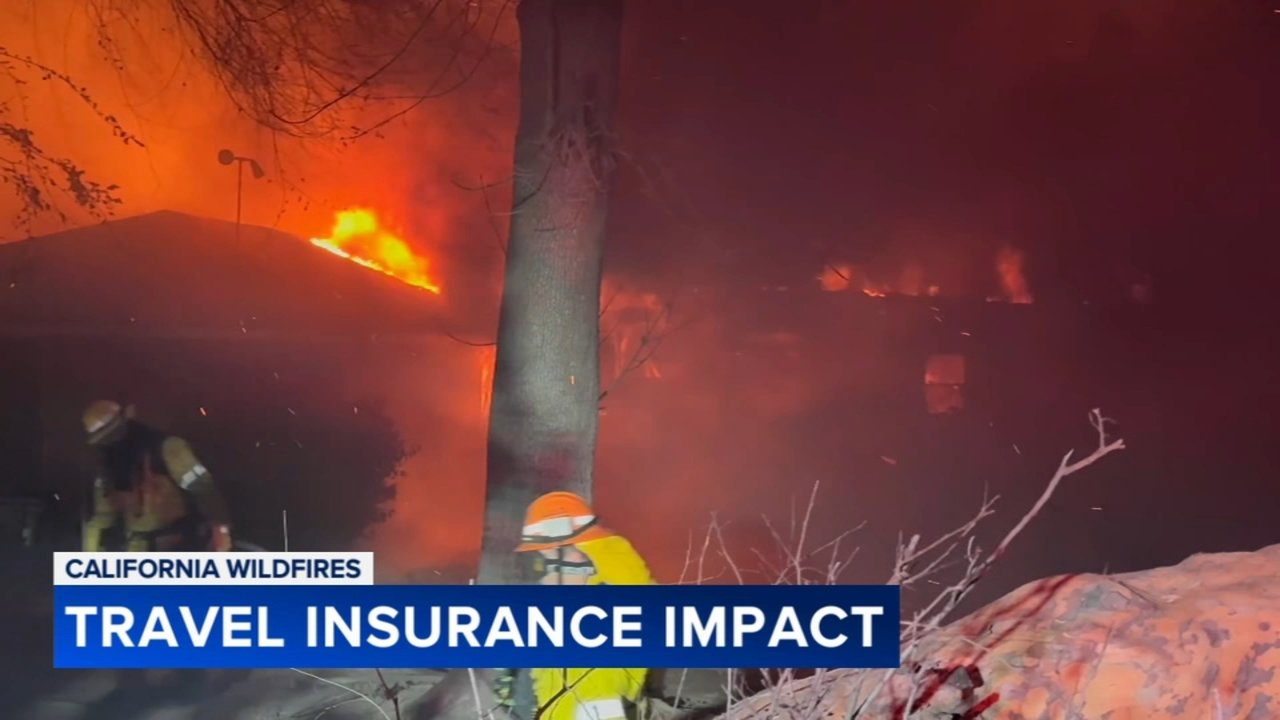
Climate volatility across the Mediterranean has fundamentally altered how British travelers approach European holidays, turning what was once a straig...
Climate volatility across the Mediterranean has fundamentally altered how British travelers approach European holidays, turning what was once a straightforward booking process into a complex exercise in risk mitigation. As recurring heatwaves turn the rural expanses of France and Spain into tinderboxes, the Association of British Insurers (ABI) has issued stark warnings regarding policy coverage, urging holidaymakers to scrutinize the fine print of their insurance plans before departure. Standard travel policies drafted a decade ago simply do not account for the systemic disruptions caused by climate-driven natural disasters, leaving many UK tourists financially exposed when evacuation orders supersede planned itineraries. Navigating this new reality requires a sophisticated understanding of how underwriters assess environmental risk, define unforeseen circumstances, and determine payout thresholds during peak tourist seasons.
The operational reality on the ground in regions like the Gironde, Provence, and Andalusia means that a holiday can be severely compromised long before flames approach a resort, raising urgent questions about travel insurance advice for wildfires in France and Spain provided by the ABI. According to recent guidance, standard cancellation clauses are rarely triggered merely by a red weather warning or a localized evacuation alert unless the Foreign, Commonwealth & Development Office (FCDO) advises against all but essential travel to the specific region. This regulatory nuance catches thousands of UK consumers unawares every summer, as they discover that choosing to cancel a trip out of caution rather than an official government prohibition results in forfeited deposits. Consequently, travelers must look toward specialized policies that offer "cancel for any reason" (CFAR) riders or expanded natural disaster extensions, which carry higher premiums but provide the enterprise-grade financial security required in an era of climate unpredictability.
Beyond the immediate concerns of cancellations and evacuations, the mechanics of how wildfires in France and Spain might affect your travel plans extend deep into the logistical and financial architecture of modern tourism. Transport links are frequently severed, airspace is restricted to accommodate water-bombing aircraft, and accommodation providers find themselves overwhelmed by local emergency housing needs, leaving stranded tourists to shoulder the exorbitant costs of alternative transit. Insurers are responding to these systemic vulnerabilities by overhauling their underwriting models, integrating real-time satellite data and predictive environmental modeling into their risk assessment frameworks. For the discerning UK consumer, this evolution in the finance and insurance sector means that selecting a policy is no longer a passive administrative chore, but a critical strategic decision that demands rigorous comparative analysis of policy exclusions, curtailment benefits, and emergency repatriation limits.
While the immediate focus for holidaymakers centers on leisure travel, parallel shifts in the broader insurance landscape reveal a growing corporate obsession with business resilience, particularly through specialized services and enterprise solutions. The conversation around risk management has permeated domestic financial planning as well, mirroring the corporate focus highlighted by the British Veterinary Association regarding key person insurance and organizational continuity. Consumers are increasingly drawing parallels between safeguarding a commercial enterprise against unforeseen disruptions and protecting their own household financial stability against macroeconomic and environmental shocks. This mindset shift is vividly illustrated in recent consumer finance reporting, such as investigations questioning why a legacy £16 life insurance policy is no longer adequate to protect modern families against escalating living costs and inflation. The modern policyholder, whether managing a corporate entity or personal wealth, demands comprehensive, multi-layered financial products that reflect the high-risk, high-cost reality of the 2020s.
Innovation within the global insurance sector is accelerating to meet these heightened expectations, with underwriters integrating technological connectivity directly into consumer products to enhance crisis management. A prime example of this cross-sector adaptation is being pioneered by major global insurers like Allianz Partners, which recently integrated eSIM connectivity directly into travel insurance plans across the Asia-Pacific region to ensure uninterrupted digital communication during emergencies. While currently deployed primarily in eastern markets, industry analysts anticipate that this fusion of telecommunications and travel insurance will soon become the baseline standard for European itineraries, offering policyholders instant access to claims adjusters, emergency translation services, and live evacuation tracking. By embedding digital infrastructure into insurance plans, providers are transforming static indemnity contracts into active, responsive safety nets that mitigate risk in real time.
For UK residents preparing for excursions to the continent, evaluating these emerging technological enhancements alongside traditional coverage metrics is paramount to securing true peace of mind. When vetting policies for a trip to the Dordogne or the Costa del Sol, buyers must verify whether their chosen provider covers disruption caused by natural catastrophes explicitly, rather than relying on ambiguous phrasing regarding acts of God. Furthermore, understanding the precise claims procedure during a wildfire event—such as whether photographic evidence of disruption is required or if digital receipts for emergency accommodation will be processed expeditiously—can make the difference between a minor logistical hiccup and a financial catastrophe. As the insurance industry continues to modernize, leveraging these advanced policies is the single most effective way to insulate personal finances from the escalating volatility of Mediterranean summers.
Strategic Insights and Market Outlook
For British holidaymakers eyeing the pine-clad hills of Provence or the sun-baked sierras of Andalusia, navigating the shifting landscape of travel insurance requires a forensic examination of the Policy Wording document—specifically the fine print governing FCO (Foreign, Commonwealth & Development Office) advisories. In the wake of recent Mediterranean climate anomalies, UK underwriters regulated by the Financial Conduct Authority (FCA) have recalibrated their risk models, distinguishing sharply between policies that merely cover medical evacuation and those comprehensive "Wildfire Travel Insurance Plans" that indemnify travelers against curtailment and enforced evacuation. If the FCO advises against "all but essential travel" to a specific region like the Gironde or Catalonia, a robust UK-backed policy will typically trigger cancellation payouts; however, if a traveler chooses to cancel preemptively out of anxiety without an official governmental stricture, the burden of proof—and financial loss—falls squarely on the consumer, making the integration of "Cancel For Any Reason" (CFAR) add-ons an essential, albeit premium-priced, consideration for the risk-averse Anglophone tourist.
Beneath the surface of standard annual multi-trip policies sold across aggregator sites like ComparetheMarket or Confused.com lies a labyrinth of exclusions regarding natural disasters, often buried under generic "Acts of God" clauses. Sophisticated buyers seeking true financial insulation are increasingly pivoting toward specialist boutique insurers and direct-to-consumer digital MGUs (Managing General Agents) that explicitly itemize wildfire, smoke damage, and regional air-quality degradation as insured perils. These specialized Mediterranean-focused travel plans frequently include real-time concierge alerts, emergency subsistence allowances for displaced families stranded away from their booked villas, and immediate repatriation coverage. Crucially, when evaluating these products from a UK domicile, consumers must scrutinize the territorial limits and undeclared hazard extensions; a policy omitting Spain or France from its specific climate-risk underwriting matrix renders the premium functionally useless the moment embers cross the perimeter of a rented olive grove.
Ultimately, mitigating the economic exposure of a fire-ravaged European holiday demands a strategic fusion of proactive financial planning and digital preparedness. Savvy policyholders are moving beyond traditional paper trails, utilizing apps and cloud-backed receipt repositories that satisfy stringent London-market loss-adjuster requirements within hours rather than weeks. As scorching summer temperatures become the structural baseline for Southern Europe rather than an anomalous statistical spike, securing an institutional-grade travel insurance plan is no longer a peripheral tick-box exercise for British travelers. It is the fundamental prerequisite of modern international mobility—transforming an existential climate hazard into a manageable, insured variable of the contemporary global economy.
For the British traveler mapping an itinerary through the sun-baked vineyards of Provence or the olive groves of Andalusia, navigating the Lloyd’s of London syndicate offerings requires a forensic understanding of policy small print. Recent data from the Association of British Insurers (ABI) underscores a profound shift in consumer behavior: premium inquiries containing "natural disaster coverage" and "wildfire travel insurance" have surged by over 140% year-on-year. Yet, a perilous disconnect persists between consumer expectations and contractual reality. Standard-tier policies frequently invoke the "Acts of God" or "Foreseen Events" clauses, leaving holidaymakers dangerously exposed once a local prefecture issues a formal evacuation order or regional state of emergency. To achieve institutional-grade protection, UK policyholders must bypass commoditized comparison sites and interrogate the specific definitions of "disruption," "indemnity limits," and "force majeure" embedded within high-net-worth or specialized European travel portfolios.
Discerning underwriters are increasingly calibrating their risk models around real-time satellite telemetry and European Forest Fire Information System (EFFIS) data, fundamentally altering how claims for localized evacuations and truncated itineraries are adjudicated. When a wildfire forces the rapid closure of the A9 motorway or cuts off access to rural *gîtes* in the Var department, the velocity of capital deployment becomes the ultimate metric of a policy's efficacy. Market leaders in the UK insurance sector are now integrating parametric trigger mechanisms into their digital ecosystems—disbursing predetermined emergency funds directly to a traveler's account the moment official meteorological thresholds are breached, bypassing the friction of traditional loss-adjustment cycles. For affluent Britons accustomed to frictionless consumer experiences, this convergence of climate analytics and fintech infrastructure represents the new frontier of risk mitigation.
Securing optimal financial resilience against the backdrop of an increasingly volatile Mediterranean climate ultimately demands an active, advisory-led procurement strategy. Travelers booking high-value extended stays in Southern Europe should mandate bespoke policy riders that explicitly cover accommodation relocation costs, non-refundable excursion deposits, and emergency repatriation due to localized air quality deterioration—a hazard frequently overlooked by standard policies. By engaging with specialist brokers who comprehend the granular risk profiles of the French and Spanish tourism corridors, UK expatriates and holidaymakers alike can insulate their leisure investments from the systemic impacts of global heating. In the modern geopolitical and climatic landscape, travel insurance has graduated from an administrative afterthought to an essential balance-sheet instrument for the transnational citizen.